Physics · Advanced Materials · Quantum Technologies · Artificial Intelligence

Physics, Advanced Materials, Quantum Technologies, and AI for Health, Energy, and Sustainability

Associate Professor of Physics — Department of Physics, State University of Maringá (UEM), Brazil

My research combines Physics, Advanced Materials, Quantum Technologies, and Artificial Intelligence to develop innovative solutions for global challenges in health, energy, and sustainability — from multiferroic ceramics and quantum materials for smarter electronics to magnetic nanoparticles that fight cancer.

📍 Department of Physics, UEM — Maringá, Paraná, Brazil ✉️ lfcotica@uem.br
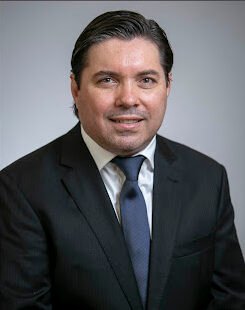
Professor Luiz Fernando Cotica
Prof. Luiz Fernando Cotica
Research

Bridging materials science, technology, and sustainability

Advanced materials have an unparalleled ability to reshape medicine, energy, and electronics. Our group, Multifunctional Devices and Materials Development and Innovation Group (GDDM), designs multifunctional materials — from complex oxides to magnetic nanoparticles — and uses AI-driven discovery to turn scientific insight into real-world impact.

Multiferroics & Smart Devices

We employ a wide range of experimental techniques — including X-ray and neutron diffraction, electron microscopy, impedance spectroscopy, and magnetic and dielectric measurements — to investigate the electrical, magnetic, multiferroic, structural, and microstructural properties of materials and devices, establishing the structure–property relationships that guide the design of sensors, microelectronics, spintronics, and energy harvesters.

MultiferroicsExperimental characterizationDiffraction & microscopyMagnetic & dielectric measurements

Nanomedicine Innovations

Imagine treating cancer with particles thousands of times smaller than a human hair — that is the promise of nanomedicine. We design biocompatible magnetic nanoparticles that can be guided directly to tumors, where they gently heat up and destroy cancer cells without harming healthy tissue (a technique called magnetic hyperthermia). These tiny particles can also carry and release medicines exactly where they are needed, and help doctors see diseases earlier through safer, non-invasive imaging methods.

Magnetic nanoparticlesHyperthermiaDrug deliveryCancer treatment

Sustainable Energy Systems

We develop advanced materials that help generate and store clean energy and we use artificial intelligence to discover them much faster than traditional methods allow. One of our fronts is the production of special catalysts designed in the lab for green hydrogen generation. Beyond energy, we create materials that clean polluted water using magnetic particles togheter fungus that capture toxic metals from industrial waste — and can then be collected with a magnet. It is materials science working for a cleaner, more sustainable future.

Machine learningGreen hydrogenEnvironmental remediation
Publications

Selected & featured work

Recent breakthroughs at the intersection of materials science, biomedicine, and AI. For a complete list of works, visit my Google Scholar profile.

More selected publications

2022
Recyclable magnetic adsorbents for heavy metal removal from industrial effluents
L. F. Cotica et al. — Chemical Engineering Journal
2021
Biocompatible PEG-coated MnFe₂O₄ nanoparticles for dual-mode MRI/fluorescence imaging
L. F. Cotica et al. — Nanoscale
2021
Magnetoliposomes for combined chemotherapy and hyperthermia in breast cancer models
L. F. Cotica et al. — Biomaterials Science
2021
Multiferroic-based piezoelectric composites for mechanical energy harvesting
L. F. Cotica et al. — Nano Energy
2020
Tunable magnetoelectric coupling in BiFeO₃-based composites for multifunctional devices
L. F. Cotica et al. — Journal of Materials Chemistry C
2019
High-performance CoFe₂O₄ nanoparticles for magnetic hyperthermia: synthesis, functionalization, and in vitro efficacy
L. F. Cotica et al. — ACS Applied Materials & Interfaces
Latest Updates

News & milestones

2024

Multinational consortium on green hydrogen

Leading an international consortium on AI-optimized materials for green hydrogen production, funded by a Horizon Europe grant (2023–2026).

2024

Preclinical trials with Brazilian hospitals

Ongoing collaboration with Brazilian hospitals to test magnetic nanoparticles for glioblastoma treatment in preclinical trials.

2023

Keynote in Singapore

Keynote speaker at the International Conference on Materials for Sustainable Energy, Singapore.

2023

Patent filed

Patent filed for a multifunctional nanoparticle platform for early-stage cancer detection.

2022–2025

Clean water for rural communities

Coordinating a CAPES-funded initiative on low-cost water purification technologies for rural communities.

About

Two decades advancing science without borders

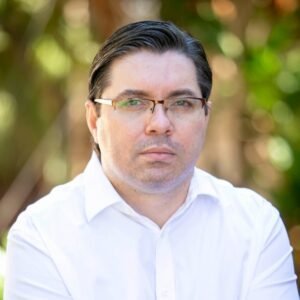
Luiz Fernando Cotica
Prof. Luiz Fernando Cotica — Department of Physics, UEM

With a career spanning over two decades, I am a physicist dedicated to advancing materials science, fostering innovation, and addressing global challenges in healthcare and sustainability. My academic journey began at the Universidade Estadual de Maringá (UEM), where I earned my Bachelor's (1998), Master's (2001), and Ph.D. (2005) in Physics, followed by a postdoctoral fellowship at the University of Texas at San Antonio (2014).

I currently serve as Associate Professor in UEM's Department of Physics and as a Permanent Faculty Member of the Graduate Programs in Physics and Environmental Biotechnology. My leadership roles have included Vice-President for Research and Graduate Studies (2020–2022), Director of Research (2018–2020), and Coordinator of UEM's Innovation and Technology Hub. I also was the Coordinator of the Graduate Program in Physics at UEM (2022–2024), a prestigious Graduate Program with a CAPES score of 6, a national mark of academic excellence. Since 2025, I am the Head o the Department of Physics at UEM.

From 2016 to 2018, I directed UEM's Multiuser Central Laboratory (COMCAP), a facility with 120+ advanced instruments supporting over 3,000 researchers annually. As a coordinator of UEM's Internationalization Laboratory, I partnered with CAPES and the Fulbright Foundation to secure 36 international initiatives, expanding the university's global footprint.

20+
Years of research in materials science
120+
Instruments directed at COMCAP multiuser lab
3,000+
Researchers supported annually
36
International initiatives secured with CAPES & Fulbright
From the Blog

Notes from the lab

Contact

Let's collaborate

Whether you are a student, researcher, or industry partner — if you are interested in materials science, biomedical applications, sustainable energy, or interdisciplinary projects, let's push the boundaries of science together.

Office hours by appointment — please email to schedule. Prospective students and collaborators: include a brief description of your background and interests in your message.

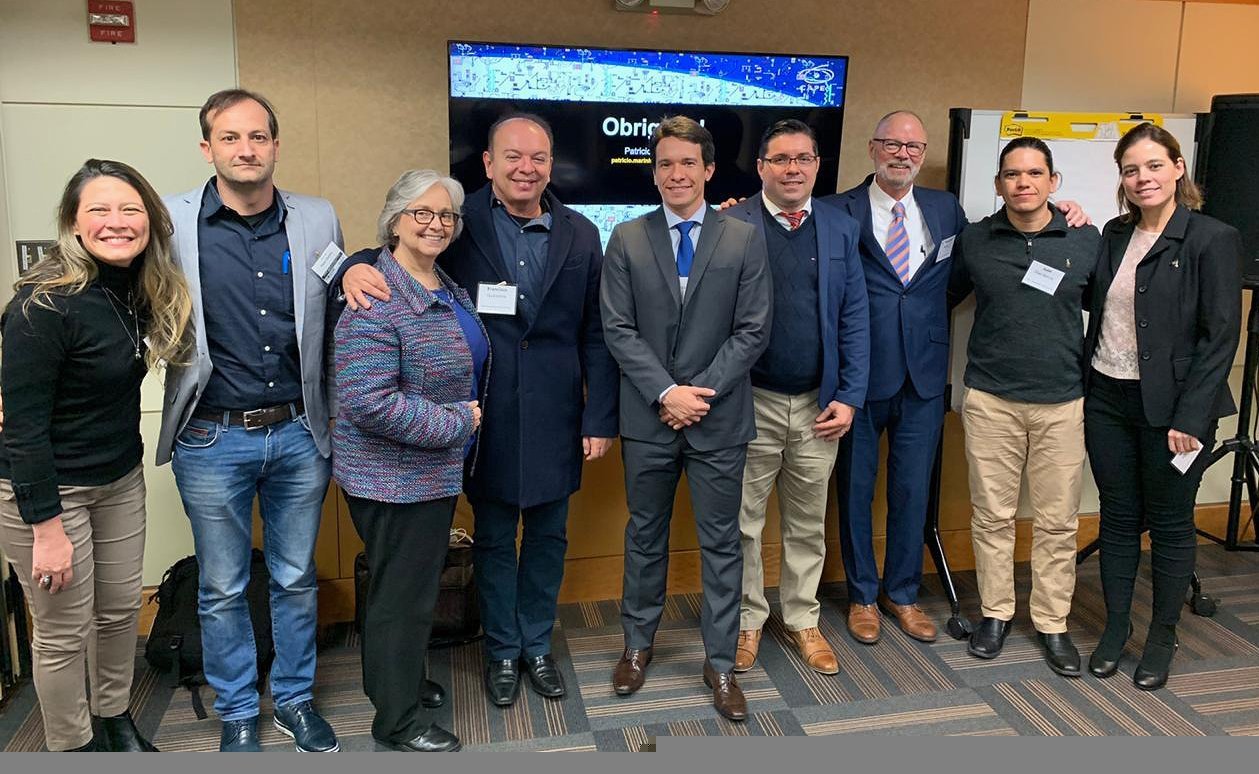
International collaboration activities
Building international research networks — UEM internationalization initiatives with partners worldwide.